
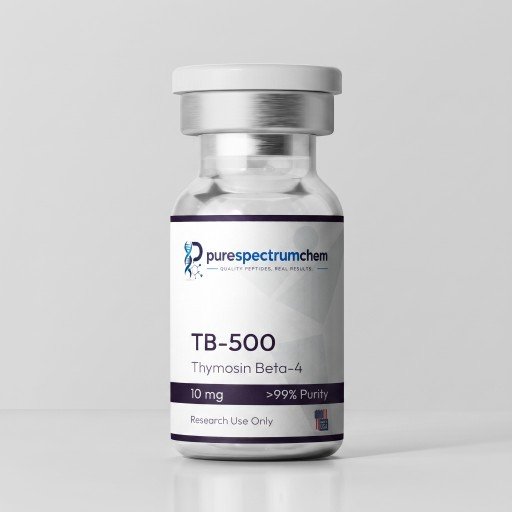
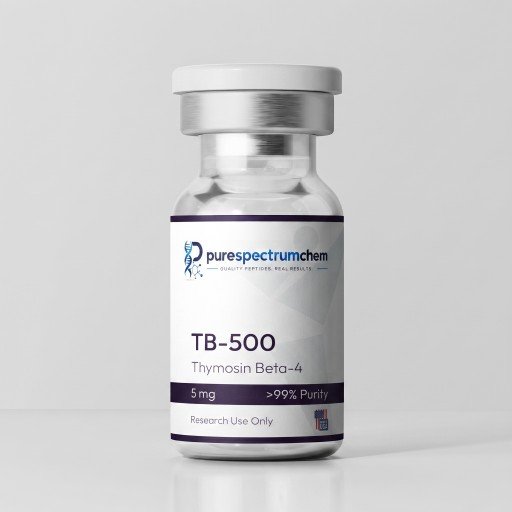
TB-500 Peptide for Research Use
TB-500 is a synthetic peptide studied in laboratory research for its relationship with Thymosin Beta-4 (Tβ4), actin regulation, cell migration, tissue repair, and angiogenesis. Research on TB-500 has primarily focused on controlled experimental models investigating cellular movement, tissue responses, and regenerative biological pathways.
Also referred to as TB500, TB-500 peptide, TB4, or Thymosin Beta-4 acetate, TB-500 is supplied as a research compound for qualified laboratory and scientific applications. The product is intended strictly for research purposes and is not approved for human or veterinary therapeutic use.
What Is TB-500?
TB-500 is a synthetic peptide modeled after the naturally occurring protein Thymosin Beta-4. Research has examined Thymosin Beta-4 and related peptide sequences in connection with actin dynamics, cellular migration, inflammation modulation, vascular development, and tissue repair processes.
In laboratory research, particular interest has been given to the relationship between TB-500 and actin polymerization, an important cellular process involved in cell structure and movement.
TB-500 Mechanism of Action
Research described in the supplied literature focuses on the interaction between TB-500-related sequences and G-actin, an actin monomer involved in cytoskeletal organization.
By influencing the balance between G-actin and F-actin, research models have examined how these mechanisms may affect cellular movement, cytoskeletal reorganization, focal adhesion formation, and related biological processes.
These findings remain primarily relevant to preclinical and laboratory research and should not be interpreted as evidence of an established therapeutic effect in humans.
Research Applications of TB-500
TB-500 and Thymosin Beta-4 have been investigated in several experimental research areas, including tissue repair, cell migration, angiogenesis, inflammation, and regeneration-related biological pathways. The available source material describes findings from cellular and animal research models rather than established human clinical applications.
Wound Healing and Angiogenesis Research
Preclinical research has investigated Thymosin Beta-4-related activity in wound closure, re-epithelialization, cell migration, and angiogenesis. Experimental models have examined changes in inflammatory markers and cellular responses associated with tissue repair.
Cell Migration and Actin Regulation
Cellular research has examined TB-500’s relationship with keratinocyte migration and actin dynamics. Studies have investigated how regulation of G-actin and F-actin may influence cytoskeletal organization and cellular mobility.
Inflammation and Tissue Repair Research
Research models have examined Thymosin Beta-4-related peptides in inflammatory and tissue-repair processes. Experimental findings include investigation of inflammatory-cell activity, cytokine responses, apoptosis, and fibrotic processes.
Peripheral Nerve Research
Animal research has investigated Thymosin Beta-4 in peripheral nerve models, including experimental changes in microvascular density and nerve-function measurements. These findings are preclinical and should not be interpreted as evidence of an approved treatment.
Cardiac and Regenerative Research
Experimental studies have also investigated Thymosin Beta-4-related activity in cardiac models and other regeneration-related pathways. The supplied research describes investigations involving vascular development, epicardial activity, and cardiac tissue responses in animal models.
TB-500 Peptide Characteristics
The supplied product information lists the following characteristics:
- Chemical Formula: C212H350N56O78S
- CAS Number: 77591-33-4
- Amino Acid Sequence: SDKPDMAEIEKFDKSKLKKTETQEKNPLPSKETIEQEKQAGES
- Synonyms: Thymosin Beta-4 Acetate, Tβ4, TB4
- Reported Molecular Weight: 4963.44 g/mol
These specifications should be checked against the documentation for the specific product batch before publication.
TB-500 vs BPC-157 vs Thymosin Alpha-1
TB-500, BPC-157, and Thymosin Alpha-1 are distinct synthetic peptide compounds that have been investigated in different areas of laboratory research.
TB-500 research primarily concerns tissue repair, cell migration, actin regulation, and angiogenesis, while the supplied comparison identifies different research focuses for BPC-157 and Thymosin Alpha-1.
| Feature | TB-500 | BPC-157 | Thymosin Alpha-1 |
|---|---|---|---|
| Peptide type | Synthetic fragment of Thymosin β4 | Synthetic pentadecapeptide | Synthetic version of Thymosin α1 |
| Research focus | Tissue repair, cell migration, angiogenesis | Gastrointestinal and soft-tissue research | Immune-modulation research |
| Reported mechanism | G-actin and cytoskeletal regulation | VEGF and nitric-oxide-related pathways | T-cell and IFN-γ-related pathways |
| CAS number | 77591-33-4 | 137525-51-0 | 62304-98-7 |
The comparison above follows the information provided in the supplied source.
TB-500 Safety and Research Limitations
Most of the research described for TB-500 and Thymosin Beta-4 comes from preclinical animal models and in-vitro research. The supplied material specifically notes that the available evidence is insufficient to establish a definitive human safety profile.
Potential long-term effects, off-target activity, and interactions with other biological systems remain areas requiring further investigation. Accordingly, research findings should not be presented as evidence that TB-500 is safe or effective for treating human conditions.
Certificate of Analysis (COA)
For research compounds, batch-specific analytical documentation can provide useful information regarding product identity and reported purity.
The supplied source states that the product is tested using analytical methods including HPLC and mass spectrometry and that Certificates of Analysis are made available for applicable batches. Any purity or testing claim should be supported by the current COA for the actual product batch being sold.
Frequently Asked Questions
What is TB-500?
TB-500 is a synthetic peptide studied in laboratory research in connection with Thymosin Beta-4, actin regulation, cell migration, tissue repair, and angiogenesis-related biological processes.
What is TB-500 also called?
TB-500 may also be referred to as TB500, TB-4, Tβ4, or Thymosin Beta-4 acetate in research and product documentation.
What is TB-500 studied for?
Research has examined TB-500 and related Thymosin Beta-4 activity in areas including actin regulation, cell migration, tissue repair, angiogenesis, inflammation, nerve-related models, and cardiac research.
Is TB-500 approved for human use?
No. The supplied source states that TB-500 is intended for laboratory research and is not approved for human or veterinary therapeutic use.
How should TB-500 be stored?
The supplied product information provides separate storage recommendations for lyophilized and reconstituted forms. Researchers should always follow the current manufacturer documentation and product-specific storage instructions rather than relying solely on a general product description.
Does TB-500 have established human safety data?
No definitive human safety profile has been established in the supplied material. Much of the available research is preclinical, and additional investigation is required to determine long-term safety and potential biological effects.
Scientific References
The supplied source includes scientific references covering Thymosin Beta-4 research involving vascular development, cardiac biology, wound healing, tissue repair, and related biological mechanisms. These references can be retained on the product page to provide additional scientific context and improve topical credibility.
Legal Disclaimer
TB-500 is intended strictly for laboratory research and scientific investigation. It is not approved for human or veterinary therapeutic use and is not intended for diagnosis, treatment, prevention, or any clinical application. Buyers are responsible for complying with all applicable laws, regulations, and research requirements.
Reviews
There are no reviews yet.